How-to
How to Choose a Good RV Dealership Before You Buy
A good RV dealership shouldn't just be good at selling you a camper van. It should be good at supporting you after you own it. Here's how to tell before you buy.
By Hank Strange and Lola Strange · · Updated September 17, 2026
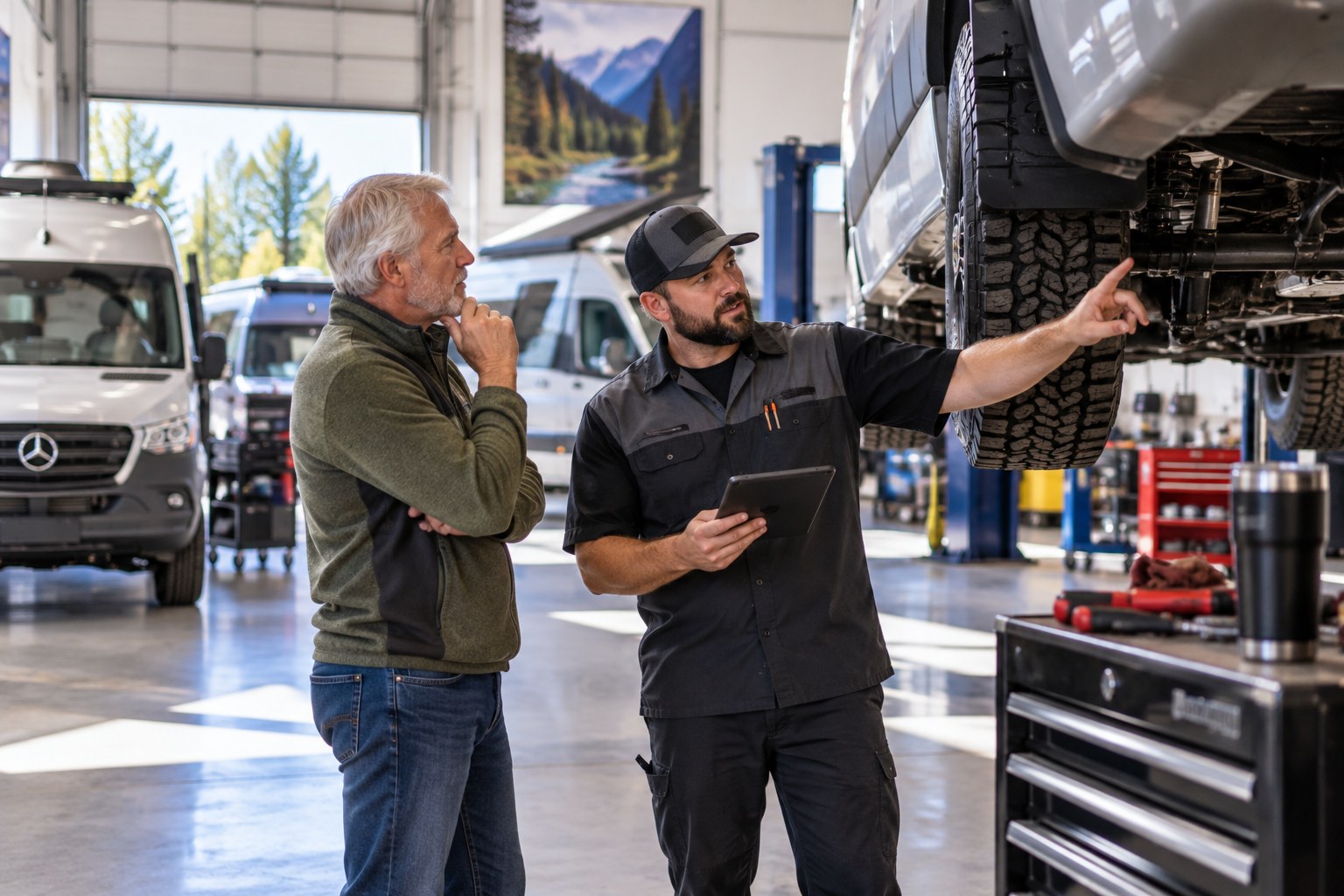
When you're shopping for a camper van, most of the attention goes to the RV.
The floor plan. The features. The chassis. The price.
But you're also choosing the people you'll likely turn to when you need help.
A good RV dealership shouldn't just be good at selling you a camper van. It should be good at supporting you after you own it.
So how can you tell before you buy?
Start With the People
Pay attention to the people working at the dealership.
How long have they worked there?
Talk to the salespeople, service advisors and technicians if you have the opportunity. Do they seem happy to be there? Do they know the products they're working with? Can they answer detailed questions?
Long-term employees can develop something that's difficult to replace: experience with the RVs the dealership sells and services.
They've seen recurring problems. They know how different systems work. And they may already know who to contact at the manufacturer when something unusual happens.
That experience can become very valuable after you buy.
Investigate the Service Department
It's easy to judge a dealership by the fancy showroom or big advertisements.
Instead, spend some time investigating what happens in the service department.
Ask:
- Are your technicians trained on the RV brands you sell?
- How long does it typically take to get a service appointment?
- Do you handle warranty repairs here?
- What happens if I have a problem while I'm traveling?
You're trying to find out what owning an RV purchased from this dealership will actually be like.
An RV combines a vehicle and a home. And like most cars and homes, something eventually needs attention.
When that happens, the service department can become considerably more important to you than the showroom.
Look at the Dealer's Relationship With the Manufacturer
There's another relationship buyers don't always see: the one between the dealership and the RV manufacturer.
We've talked about this with Coachmen Class B RVs General Manager Nick Recchio. The dealership is often the owner's first point of contact when something needs attention, so the relationship between the dealer and manufacturer matters.
We'd want a dealership with trained, experienced staff who know the manufacturer's products and can fully address an owner's concerns.
They should know how to diagnose problems and how to work with the manufacturer when an issue requires factory involvement.
A strong manufacturer-dealer relationship doesn't guarantee that nothing will go wrong.
It can make a big difference in what happens when something does.
Talk to Existing Customers
Don't rely only on what the dealership tells you.
Talk to people who have actually bought RVs there.
Owner groups can be particularly useful. Instead of simply asking:
“Did you get a good deal?”
Ask:
“What happened when you needed help?”
Did the dealership return calls? Were you able to get service? Did the dealer work with the manufacturer? Was your problem resolved?
And perhaps the most revealing question:
Would you buy from that dealership again?
The buying experience lasts a few days.
The ownership experience can last for years.
Don't Choose a Dealer on Price Alone
Of course price matters.
But if you're comparing similar camper vans at different dealerships, don't look only at which one gives you the lowest number.
Also consider the dealership you're getting with the RV.
A lower purchase price may not feel like much of a deal if getting knowledgeable service and support afterward becomes difficult.
Watch: What Makes a Good RV Dealership?
We talked with Andrew Cooley of Remote Vans about the relationship between RV manufacturers, dealerships and customers—and what manufacturers look for in a dealer business relationship.
The conversation gives buyers another perspective on why the relationship between the manufacturer and dealership matters.
Before You Choose a Dealer
Before buying, we'd want answers to four questions:
Are the employees happy working there—and have they stayed for years?
Do the sales and service staff really know the RVs they're selling and servicing?
Does the dealership have a good working relationship with the manufacturer?
Would their existing customers buy from them again?
Those answers can tell you a lot more about a dealership than the size of its showroom.
The best time to find out how a dealership treats its customers is before you become one.
Before You Spend the Money
Don't spend a dollar on a van until you've read this free guide.
Sources & references
Topics
- Buying