StrangerPalooza guide
New vs. Used Camper Van: Which Should You Buy?
Should you buy a new or used camper van? Price, warranty, depreciation and floor plans matter — but buying the wrong van is the costlier mistake.
By Hank Strange and Lola Strange ·
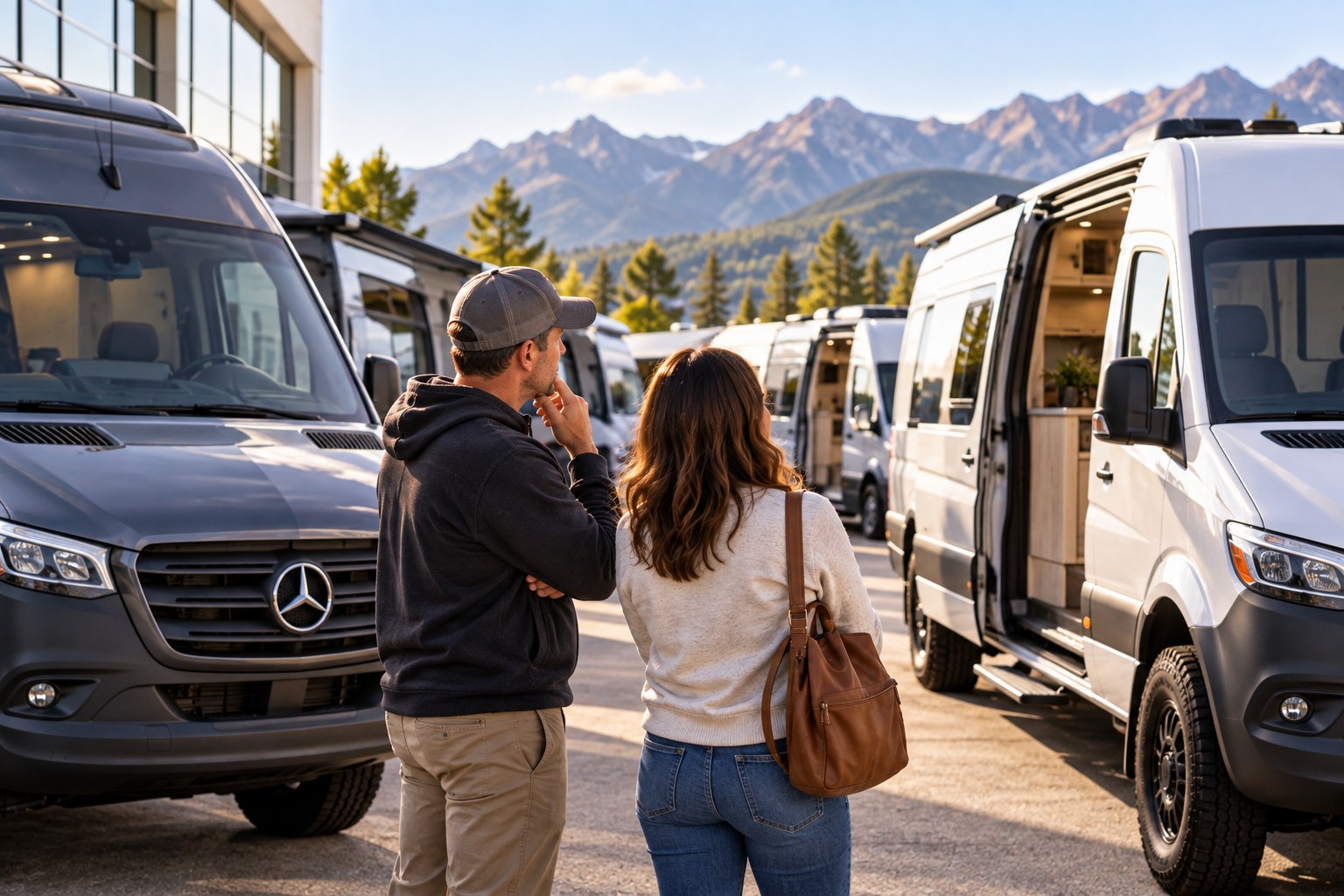
Camper vans aren't cheap, so one of the first questions many buyers face is whether to buy new or save money by buying used.
After touring plenty of both and talking with people who sell new and used Class B RVs, one lesson stands out:
The biggest mistake may not be buying new or used. It's buying the wrong camper van.
Start With the Right Van
Before worrying about model year or mileage, figure out what you actually need.
Floor plan, bathroom, sleeping arrangement, power system, storage and how you plan to travel can matter more than whether the van is brand new.
We recently discussed this with Nick Schmidt and Canada Mike from Sunshine State RVs, a Florida RV dealership specializing in Class B camper vans.
They shared a great example.
A customer bought a 2027 Coachmen Nova from another dealership but soon discovered the rear-bath floor plan wasn't what they really wanted. Sunshine State had a 2026 Nova with the floor plan they preferred.
They traded the nearly-new 2027 for the older 2026—and took a financial hit in the process.
They eventually got the camper van that worked better for them. The expensive part was figuring that out after the first purchase.
Not Sure Which Camper Van Is Right for You?
With so many floor plans, features and options, narrowing down the choices can be difficult. Our free Vanalyzer helps you compare what matters to you and find camper vans that better fit how you actually plan to travel.
Why Are Nearly-New Camper Vans for Sale?
You find a two-year-old camper van with 2,000 miles on it and immediately wonder:
What's wrong with it?
Sometimes, nothing.
Sunshine State RVs told us people trade vans for all kinds of reasons. It may be too small, too big, have the wrong floor plan, or the owner may decide they want features such as a lithium power system.
During our podcast conversation, they even mentioned a used camper van coming in with only about 500 miles.
A quick trade-in isn't automatically a red flag—but you should still find out why the van was traded.
Watch: Shopping for a Used Class B Camper Van
We walked through actual used Class B inventory with Sunshine State RVs to see what buyers can get for their money.
How Much Can Buying Used Save?
During our walkthrough, Nick said buyers can sometimes save around 15–20% by buying used. That's his experience with the dealership's inventory, not a guarantee for every camper van.
We also looked at a 2023 Roadtrek Chase with only about 3,000 miles that Nick estimated was roughly $20,000 cheaper than a comparable new van.
A lightly used van may still have the features you're looking for while someone else has already taken the initial depreciation hit.
Don't Compare Price Alone
A used van that's $20,000 cheaper isn't automatically a better deal. You also need to consider warranty, condition and service after the sale.
Warranty coverage can vary between the chassis, RV manufacturer and individual components, so don't assume the original owner's coverage automatically transfers.
Ask what's still covered, what the dealer has inspected or repaired, and what happens if you discover a problem after the purchase.
Sunshine State RVs told us it provides a 90-day warranty on its used RVs along with additional support. That's that dealership's policy, not something every used-RV dealer provides.
And if you're seriously considering a used camper van, we'd consider having it independently inspected before buying it.
Sometimes Used Gets You Something New Can't
There's another advantage to buying used: you may prefer an older floor plan.
During our walkthrough, Nick showed us a Winnebago Travato GL with a configuration Winnebago later changed. The older version offered a seating and sleeping arrangement that could work better for certain buyers.
If you prefer a discontinued configuration, buying used may be the only way to get it.
When Does New or Used Make More Sense?
Buying new may make more sense when you want a particular configuration, the latest equipment and full new-RV warranty coverage—or when the price difference isn't large enough to justify buying used.
Buying used may make more sense when you find the right floor plan and equipment in good condition with meaningful savings.
Nick described customers who arrived looking for used and decided spending another $15,000 for new was worthwhile. He also described a buyer considering a new Travato who chose a recently traded used one because he could save tens of thousands of dollars.
Hear More From the Dealer Perspective
We talked more about used RVs, trade-ins and choosing the right camper van during our VanNoisSeur Podcast with Sunshine State RVs.
Before You Buy
Don't spend a dollar on a van until you've read this free guide. Our Camper Van Buyer's Guide focuses on the things that actually matter before you buy.
So, New or Used?
Don't automatically assume new is better—or that used is the smarter deal.
Find the camper van that fits how you want to travel, then compare the new and used options available.
If a lightly used model gives you what you want and saves you thousands, it's worth considering. If buying used requires compromises and the difference to get what you want new is relatively small, new may make more sense.
Because saving money on the wrong camper van isn't much of a bargain.
Sources & references
Topics
- Buying