RV Life & Travel
Fall RV Travel Tips: What to Know Before Your Next Road Trip
Planning a fall RV road trip? Here are the fall RV travel tips every RVer should know, from colder nights and campground closures to bears, pets, road conditions and fall colors.
By Hank Strange and Lola Strange
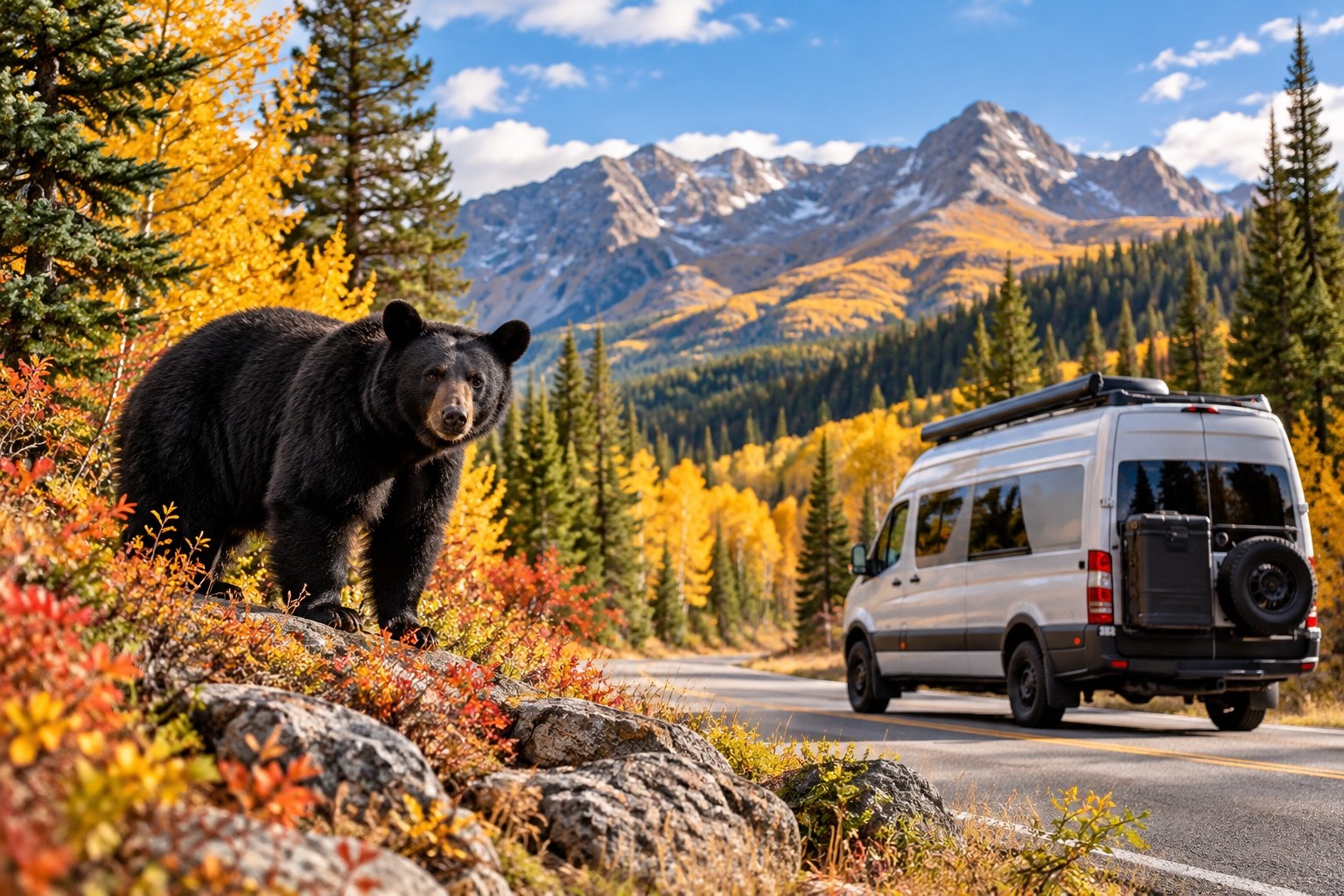
Fall might be one of the best times of the year to travel by RV or camper van.
The summer crowds begin to thin out, temperatures cool down and in many parts of the country the scenery completely changes.
But fall RV travel is different from summer RV travel.
Wildlife gets more active, nighttime temperatures can drop quickly, campgrounds begin reducing services and mountain weather can change without much warning.
A little planning goes a long way.
Fall Means More Wildlife Activity
A couple of recent incidents in Colorado are a timely reminder.
On September 11, a woman camping at Park Creek Campground in Rio Grande National Forest was bitten after a black bear encountered her tent. Two days later, a teenager in Durango was injured in a separate incident involving a bear that entered through an open window.
That doesn’t mean you should avoid camping in bear country.
It does mean fall is an especially important time to remember that we’re camping in their neighborhood.
Bears enter a period called hyperphagia in the fall as they prepare for winter. Colorado Parks and Wildlife says they can spend as much as 22 hours a day feeding while trying to consume around 20,000 calories.
For RVers, the takeaway is simple.
Don’t leave food, coolers, trash or pet food outside. Use bear-resistant containers and food lockers where required. Close vehicle and RV windows when you’re away or sleeping, and clean up anything around camp that might smell like an easy meal.
And one thing that’s particularly easy for RVers traveling with pets to overlook:
Pet food is food to a bear too. Bring the bowls in.
Beautiful Fall Days Can Turn Into Cold Nights
You might spend the afternoon hiking in a T-shirt and wake up the next morning to temperatures near freezing.
That’s one of the biggest differences between summer and fall travel.
Don’t just check the daytime forecast. Look at the overnight low.
If temperatures are expected to drop near freezing, think beyond whether you’ll be comfortable inside the RV. Check your fresh-water hose, outside plumbing and anything else exposed to the cold.
And if you’re traveling through mountains or higher elevations, remember that snow and icy conditions can arrive surprisingly early.
Your Campground May Be Open — But Everything Else Might Not Be
This one can catch RV travelers by surprise.
A campground showing OPEN doesn’t necessarily mean it’s operating the same way it did in July.
As the shoulder season begins, campgrounds may close loops, turn off water, reduce trash collection, close dump stations or reduce visitor services.
Denali National Park provides a good real-world example this fall.
Beginning September 21, the Bear Loop at Riley Creek Campground is scheduled to become free and first-come, first-served.
Sounds great.
But there’s a catch.
There won’t be water or trash service. Campers need to bring their own water and pack out their trash.
That’s exactly the kind of detail worth knowing before you pull into camp.
The Days Are Getting Shorter
Summer road-trip habits don’t always translate well into October.
There’s less daylight for setting up camp, exploring an unfamiliar campground or dealing with something unexpected.
If you’re moving between campsites, check sunset along with your driving time.
Pulling into a beautiful campground at 4 p.m. is a lot more fun than trying to find your site for the first time in the dark.
Now for the Best Part — Fall Colors
This is why we’re doing all this planning in the first place.
There aren’t many things better than waking up in the van on a cool fall morning surrounded by changing leaves, grabbing a cup of coffee and deciding which scenic road to explore next.
Places you’ve visited before can look completely different in the fall.
But popular leaf-peeping destinations can still get busy—especially on weekends.
One of the advantages of traveling by camper van or RV is flexibility. If your schedule allows it, consider arriving during the week, checking foliage conditions before you leave and keeping a backup destination in mind.
Sometimes the best fall stop isn’t the famous overlook everyone else is trying to reach.
Our Fall RV Road-Trip Checklist
Before pulling out of the driveway:
- Daytime AND overnight temperatures
- Campground water, dump station and services
- Road and mountain-pass conditions
- Local wildlife alerts
- Food and trash-storage rules
- Pet food and bowls secured
- Sunset time
- Current fall-color conditions
- A backup plan
Screenshot it. Save it. Then go enjoy fall.
Don’t Let the Extra Planning Keep You Home
Fall isn’t a reason to park the RV.
It’s a reason to use it.
Check the weather. Check the campground. Secure the food. Bring an extra layer.
Then hit the road and enjoy one of the best RV travel seasons of the year.
Topics
- RV life & travel