RV Life & Travel
How Much Is Too Much for an RV Campsite?
A firsthand look at expensive waterfront campsites, premium locations, seasonal pricing and what RVers get for the money.
By Hank Strange and Lola Strange
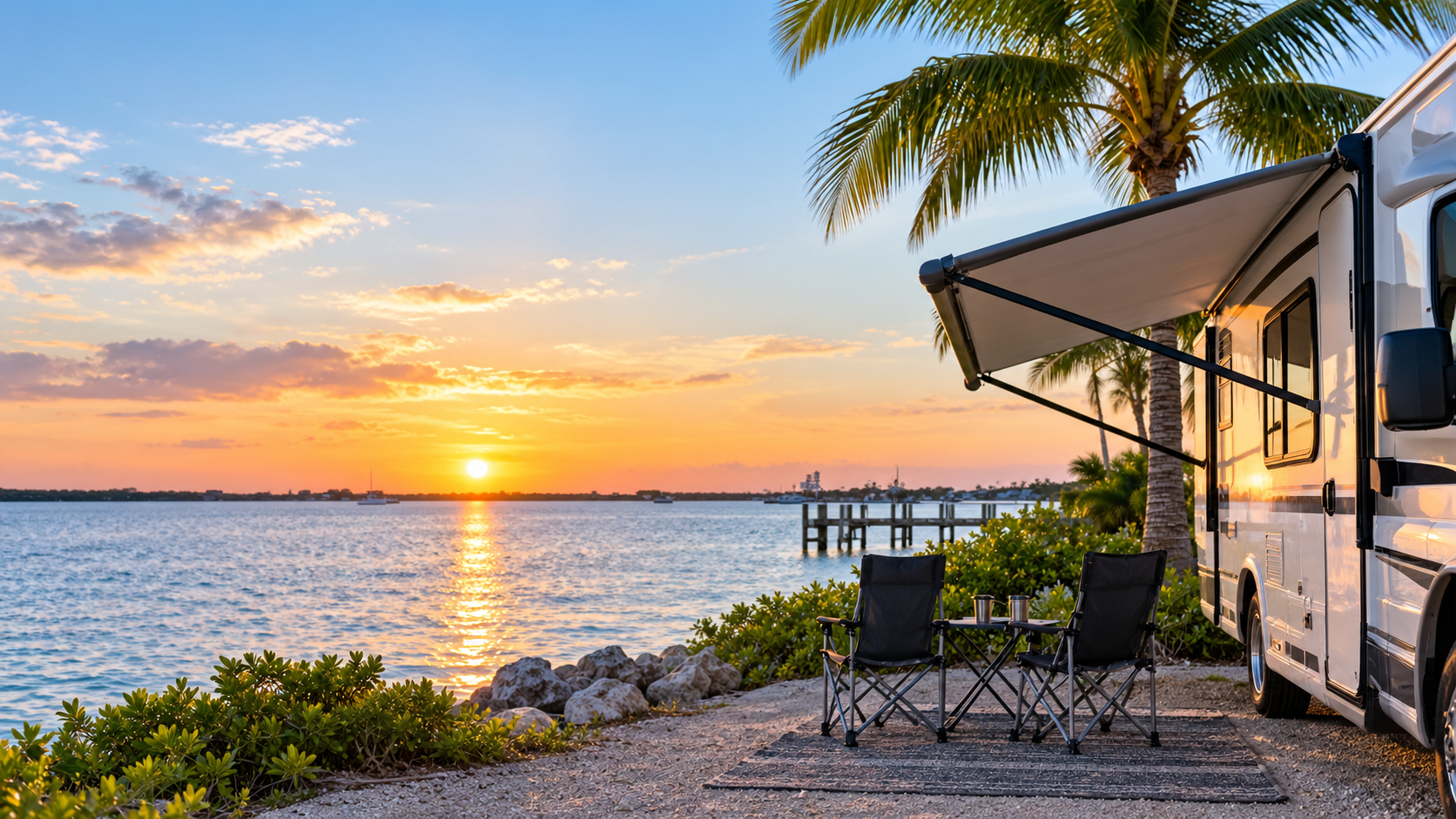
There was a time when one of the big selling points of RV travel was that you could bring your own bed, kitchen and bathroom — and save some money along the way.
But what happens when the campsite starts costing as much as a hotel room?
We ran into that question ourselves while planning a trip to St. Augustine, Florida. We were looking at staying at a campground on the water while filming with the Noovo, and I remember seeing a waterfront site approaching $300 for one night.
My first reaction was pretty simple:
How much is too much for an RV campsite?
And St. Augustine isn't the only place where we've encountered expensive camping.
When we took the Coachmen Pixel down to Key West, we stayed at Boyd's Key West Campground. It's a fantastic location — close to Key West with sites right on the water — but that location comes at a price.
Today, Boyd's lists its open-water-view RV sites starting at $195 per night, before taxes and applicable fees.
Suddenly, we're not talking about inexpensive camping anymore.
You're Paying for More Than a Place to Park
Of course, a $200 campsite in Key West isn't really competing with a $50 campsite somewhere along the interstate.
You're paying for location and experience.
A waterfront campsite in the Florida Keys lets you wake up in your own RV and step outside to the water. The same can be true for beachfront campgrounds, national park gateway towns and other destinations where the location becomes part of the trip.
There may also be full hookups, pools, laundry facilities and other resort-style amenities included in the price.
So comparing the campground rate directly with a hotel room isn't always apples to apples.
But you've also already bought the RV. You're paying for fuel, insurance and maintenance — and possibly an RV payment. Add an expensive campsite every night and the economics of RV travel can change pretty quickly.
That's why, for us, the better question is:
What are we getting for that money?
We're more willing to pay extra when the campsite itself becomes part of the experience. If we're mostly paying for amenities we aren't going to use, that's a different calculation.
Sometimes we'd rather stay 20 or 30 minutes away, pay considerably less and drive into town.
Before Paying the Premium
When we see an unusually expensive campsite, there are a few things worth researching before we book:
- Location: Does staying there save a significant amount of driving or put us somewhere special?
- Time of year: Compare peak, shoulder and off-season rates. Moving a trip by a few weeks — or choosing another season — could make a big difference.
- Site: Are we paying extra for a true waterfront, beachfront or premium view?
- Amenities: Will we actually use the pool, clubhouse, activities or other resort features?
- Alternatives: Is there a considerably cheaper campground a short drive away?
- Length of stay: Paying a premium for one memorable night feels very different from paying it for a week.
- Total cost: Don't forget taxes, resort charges and booking fees when comparing prices.
Don't Overlook the Time of Year
And don't assume "off-season" means the same thing everywhere.
Florida is a perfect example. Winter can actually be one of the most expensive times to camp because that's when many travelers head south.
At Boyd's in Key West, May into October is considered off-season, while the winter months include its peak season. So the same campground — and potentially the same type of site — can cost considerably more depending on when you visit.
If your travel dates are flexible, check several different dates before booking. Sometimes the easiest way to make an expensive destination more affordable is simply to visit at a different time of year.
So...How Much Is Too Much?
There isn't one number that's going to work for every RVer.
A family looking for a campground with a pool and activities may put more value on resort amenities. Someone staying for one night will look at the price differently than someone staying for two weeks. And traveling in a camper van can sometimes give you more flexibility to choose a smaller or simpler campsite.
For us, it comes down to whether the price matches the experience.
If we're paying extra because we're waking up on the water in Key West, camping steps from the beach or staying somewhere that becomes a memorable part of the trip, paying a premium occasionally can make sense.
If we're paying that same premium simply for a place to park the RV overnight?
We're probably looking for another campground.
But I'm curious where other RVers draw that line.
What's the most you've ever paid for one night at an RV campground — and was it worth it?
Topics
- RV life & travel